
Executive Summary and Back Ground information:
Ngorongoro District is one of seven districts of Arusha Region in Northern Tanzania. The district is bordered to the north by Kenya, to the east by Monduli District, the northeast by Longido District, and to the south by the Karatu District. The western border is the Serengeti District in Mara Region. Ngorongoro District is home to the Ngorongoro Crater. It covers an area of 14,036 km2 (5,419 sq mi]. The administrative seat is the town of Loliondo. The district is home to the Ngorongoro Conservation Area which is a UNESCO World Heritage Site. According to the 2012 Tanzania National Census, the population of the Ngorongoro district was 174,278 ( growth rate is 2.9-3%), 89% of the population are indigenous pastoralists. The district has three administrative division namely Ngorongoro (NCA), Loliondo and Sale -The NCA covers an area of 8,292 km2 in Ngorongoro District (59% of the district’s total area), Loliondo 4000Km (228.4%) and Sale 1,744Km2(12.4%).
The Maasai have lived for generations in the Serengeti ecosystem in Tanzania and have shaped and protected these lands, preserving wildlife and biodiversity in areas such as Loliondo, the Ngorongoro Conservation Area and the now Serengeti National Park. However, they have been systematically marginalised and violently evicted from their ancestral lands to make way for conservation projects, tourism, and trophy-hunting schemes, severely violating their human and constitutional rights. In recent years, the Tanzanian government has been running a brutal campaign against the Maasai, characterised by forced evictions which have already affected tens of thousands of Maasai people across various regions. In 2022, the evictions of the Maasai in Loliondo to make way for a tourism and conservation operation were marked by extreme violence. The Tanzanian government has also paralyzed the availability and access to vital social services, such as health services in Ngorongoro, as a weapon to force the Maasai out of their ancestral land. The government is running a brutal campaign against Maasai in the country.
The land conflict in Ngorongoro district has been tackled at various national and international levels involving various stakeholders, this report will detail state more on how the community is involved in the conflict and how this project has been a part of ensuring that there is a enduring solution to this conflict will be achieved. This report will also highlight important events/updates from April and May 2023.
KEY UPDATES:
On 4th April 2023 – Msomera villagers have got organized to protest being illegally displaced by the “relocation” of Maasai from Ngorongoro Conservation Area, and their testimonies were all over online media, also to some extent regular media. On 5th April 2023 Criminal Appeal No. 9 of 2023 was mentioned in court, people from Ngorongoro division who in January had to pay the usual extortion fines when their livestock were seized in the illegal game reserve in Malambo, are challenging the imposition of TShs 100,000per head of cattle as unfounded in the law, and the jurisdiction of NCAA in imposing such fees .https://youtu.be/Qi8wdTeJ5BU.
On 6th April 2023 – Davis Mushi, Serengeti senior conservator and head of security department, ignored court summons for disobeying Mugumu court orders to release 440 cows illegally held at Bologonja since 21st March.
SEIZED OF LIVESTOCK CONTINUE, 12th April 2023 200 cows seized in Oloipiri owner pay 20 Milion ‘’fine”, 0n 17th April 2023, 304 sheep belonging to Mbaoi Pusindawa from Lemetema were seized by rangers when taken to water in the fake and illegal game reserve in the Nadengare area, Sanjan, Malambo. The sheep were taken to the Orng’oswa camp and the owner had to pay an illegal 7.6 million “fine”. 2nd May 2023 – 268 cows belonging to three members of the Tiiye family were illegally seized in the Orng’oswa area of Sanjan sub-village of Malambo, on land brutally and lawlessly demarcated as “game reserve”. 250 cows belonging to mzee Sarkay Tiiye, 12 belonging to mzee Olodupa Tiiye, and 6 belonging to Kimani Tiiye. The owners paid the extortion money of 26.8 million TZS,
3rd May2023 – 120 cows were seized by 12 rangers, including SENAPA, NCAA and FFU, in the Empiriripiri area of Ololosokwan, just outside the illegally demarcated game reserve. The owner, Kutiti Ketuta, was severely beaten, his testicles crushed. The extortion money of 100,000 per head of cattle was paid.
17th May 2023 – Vice president Philip Mpango visited Ngorongoro district and inaugurated several projects, while the land theft and human rights violation in Loliondo weren’t addressed in any way. Some people handed over protest placards about the blocking of social services and other restrictions imposed to make the Maasai leave Ngorongoro “voluntarily”. Mpango read some of the placards. On 20th May 2023 The Ngorongoro councillors voted in unison to reject Ngorongoro District Land Use Framework Plan 2023-2043 and in support of a motion against the suffocation of social services in NCA.
PALISEP through support from FH has enabled the community to engage the government of Tanzania in various sessions and discussions. PALISEP has built the capacity of Community animators by enabling training on how to report events digitally and share with wider networks. PALISEP supported community animators to get smartphones, devices which help community animators to report violation of human rights in their respective villages. PALISEP also facilitated stakeholder meetings with Various stakeholders aiming to find the lasting solution of the conflict.
Program Activities:
Informations Sharing Workshop
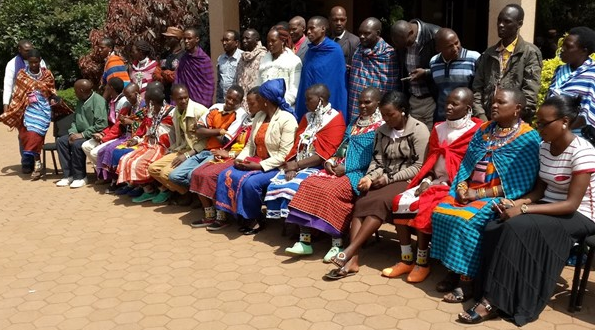
A Workshop with land stakeholders was conducted on February 8, 2023, in Loliondo. The specific objectives of this workshop were to bring together stakeholders to share information related to the land crisis and propose the best way to engage the government to find the long-lasting solution of the matter, The workshop was attended by 30 participants from NGOs, traditional leaders, Youth and women. Participants were divided into groups and given the opportunity to write down and explain in detail about the major violations of human rights committed by the government in their localities. During their presentations, participants came with testimonies about the arbitrary capture of livestock and the imposition of large fines and confiscation of Livestock, participants also accused the government of causing new conflicts within communities in the region. The government set new boundaries in the villages that were affected by alienation of community land tallying 1500 square Kilometers. Participants were advised to use social media and digital platform to raise voice. PALISEP has also engaged ward councillors to ensure land matters are mainstreamed in the district council discussions and plans, Despite the fact that many councillors were tortured and threatened, they have continued to stand up for issues concerning human rights violations.
CONDUCT COMMUNITY ANIMATORS TRAINING AND PROVISION OF SMART PHONES
This training aimed to provide community animators with proper training on how to advocate and influence changes digitally. A total of 50 Animators from the Loliondo, Sale and Ngorongoro divisions were trained. Animators indeed received introductory training on animation techniques, training on the use of digital tools to do digital influencing.The training took place within the setting of Tanzania’s Cybercrime Act of 2015, which criminalizes and penalizes various cyber activities. The Cybercrimes Act has been criticized from the very beginning by civil society actors as a threat to freedom of expression and as a means to control online spaces. The primary mechanism for achievement of the project is placing the power and information of the internet in the hands of 50 community animators, through the provision of smartphones and training on the use of smartphones and available associated technology (internet search engine, WhatsApp, Facebook, Twitter and other social media, email, etc.). a total of 23 smartphones were provided to the community animators to support data and information sharing.
By this reporting period ,there have been significant increases in digital technological knowledge and social media platforms engagement (WhatsApp, Facebook, twitter etc) among the community animators. Reporting Human rights violations has been doubled compared to before the training, Animators have had the courage to hold open discussions on social media, for example after the training WhatsApp groups were created by animators and bring government leaders onboard and and ask them difficult questions, TUJENGE NGORONGORO, WARAGBISHI ARUSHA, NEW CCM VISION , ENGAJI NABO are some of the new platforms created by Animators Government and political leaders are brought on board to discuss issues related to the land disputes.
REFLECTION SESSION WITH WARD COUNCILORS.
The government of Tanzania has been doing a lot sabotage regarding land use in Ngorongoro District, participatory Villages boundaries Surveying has been done in the villages of Loliondo and Sale divisions, The land use was prepared with the aim to justify the land that was taken from the community – PALISEP conducted training for the councilors aiming to review the draft of the proposed Land use plan to enable the councilors to make right decisions in the councilors’ general assembly, As the result, On 20th May, the Ngorongoro councillors voted in unison to reject Ngorongoro District Land Use Framework Plan 2023-2043 and in support of a motion against the suffocation of social services in NCA. Those who have moved to Msomera – Tiamasi from Kakesio and Rumai from Eyasi – were not present. Along with other reasons, the councilors have rejected the plan that it is not in the interest of the people and that its aim is to take large areas of the people’s land and make it conservation areas.
TRAINING OF COMMUNITY LEADERS AND WOMEN CHAMPIONS
Many human rights defenders across Ngorongoro district in Northern Tanzania are subject to serious threats. Whether it may be harassment and persecution, smear campaigns, arbitrary arrests and disappearances, many of them face a qualified and powerful opposition to their daily efforts. Living and working in such environments takes its toll, on both the physical and the mental wellbeing of the individual. Only the synergies of a range of interventions can help strengthen their security. Women and traditional leaders have been significant in land right in Ngorongoro, PALISEP has conducted a three-day training aimed at building the capacity of women and traditional leaders, the specific objectives of this training is to empower women and traditional leaders on how to ensure their safety as human right defenders, Raising awareness on the general understanding of HRDs working environment, preventive protection assessment and the importance of situation analysis. Throughout this training, facilitator employs a number of methods and techniques including but not limited to; Pre and Post training survey to the participants, PowerPoint presentations, Case Studies, Dialogues, Experience sharing sessions, Q&As, Small Group Discussions, Breakout sessions and Energizers.
Key Outcomes.
- Increased participant’s familiarity with their working environment, preventive protection and their safety when doing their human rights defending work.
- Participants are strengthened and equipped with organizational and advocacy intervention strategies.
- Participants are equipped with knowledge on regional and international mechanisms for protecting Human Rights Defenders rights
INFORMATION SHARING MEETING AMONG KEY COMMUNITY ADVOCACY ACTORS
The main goal of this session is to bring together stakeholders to share information about the land crisis in Ngorongoro District, a total of 30 participants participated. These participants include community members, animators, traditional leaders, youth and women, The workshop used a participatory approach, which allowed the exchange of information and experience among participants and between participants and facilitators. It was delivered through a blend of presentations and knowledge-sharing activities (Case Study and Brainstorming) geared to create a positive learning environment. Each session started with a short technical presentation. Participants were divided into groups according to the areas they come from, were asked to list important information from their localities/ areas especially those related to human rights violations. Participants were given the opportunity to make presentations. Among other things, the seizure of livestock, threats are among the things that have been classified as a major challenge in many areas, Loliondo and Sale Division while Ngorongoro Division shows the food crisis and the absence of important services such as health and education services. The government has deliberately expelled provision social services in the Ngorongoro division so that the people have a difficult living environment
Impact:
Increase in digital Activism
As the outcome of project, there has been a huge increase digital activism. People have been discussing the land crisis in the Ngorongoro district on Twitter, Facebook and WhatsApp than any other time in history of this crisis.These discussions have been able to convince the regional mechanism to make official visit to Tanzania, for example, the African Commission for Human and Peoples’ Rights, the Commission for Human Rights and Good Governance of Tanzania were able make official visits Loliondo, Ngorongoro and Msomera with the aim of listeninf to the concerns of the citizens despite the fact that their reports may not result into any fruitful outcomes/interventions as expected.
Increase in Community confidence in expressing land concerns.
There have been threats and intimidations from government officials to citizens who provide information related to land grabbing. This project has built confidence among community members to be active citizens especially the trained community animators. Human rights violations are being reported with great confidence, for example when the human rights commission arrived in the Loliondo and Ngorongoro areas citizens were able to give explanations in front of the district Commissioner without fearing anything.
United Community to fight for their land rights.
The tool that has been used by the government is divide and rule, Corruption and financial influence has been used by the government to divide the community. During the reporting period, the community has shown unity and solidarity in fighting for their rights. Those who seem to participate in destroying and going against the community are excluded and are not allowed to participate meetings.
Challenges:
Threat and Intimidations of PALISEP and Other Human Rights defenders from government
There are has been threat and intimidation and threat and intimidation during Implementation Process, PALISEP officers have been receiving threats from security officers, PALISEP’s senior officers were summoned to report to the district’s security committee twice and asked not to participate in conflicts.
Mitigation Measures – PALISEP’s Management has ensured that it comply with all legal procedures, including paying all mandatory payments to the government so that there is no room for legal action, in addition, PALISEP conducts safety training for its employees on a regular basis.
Insufficient fund to tackle emerging issues
There are emerging issues which are directly related to this project, but was not budgeted within project contract. This makes hard to PALISEP to tackle regardless of its importance, for example Human Right watch need to interview the victims of the land conflicts but they have avoided to visit the area, they requested to support the victims to go Dar es Salaam for interview but we failed to support due as PALISEP have no budget line for that activity.
Mitigations Measures- PALISEP was able to connect the victims with Human Right Watch through video even though the Internet was not stable and thus affected the interviews
Lessons Learnt
Digital activism is viable as it helps to spread information more quickly:
Since the beginning of this project, there has been a huge increase in discussions about Loliondoand Ngorongoro in social media. Citizens, especially Animators, have been discussing every day about the conflicts and emerging issues that are happening in their areas and thus distributing it in social media, These discussion has been also carried out in various platforms in and out of Tanzania. For example see this link https://t.co/qV6GBZxiJn
There are human rights violations that were not reported.
During the community animators training, participants explained about the human violations that are happening in their areas but it was only few of those things were reported. There are reports of sexual abuse taking place in Ngorongoro division by park rangers but not reported.
Building community Capacity Brings Better Results.
Loliondo crisis has been tackled by different stakeholders using different methodologies at the national and international levels, the community has been left behind with no any capacity building, this situation appears to look like the problem does not exist in the community. As the result this project community has been able to speak confidently about the land crisis and other issues
 Pastoral Livelihood Support and Empowerment Program (PALISEP)
Leave a comment