
Introduction
Women in the pastoral communities do not have right to ownership and control of cattle, which is the major means of production in their communities; yet, women are the primary players in household subsistence and children health and nutrition welfare. The situation renders these women powerless and voiceless while escalating effects of hunger, food and nutrition insecurity and poverty all together in the households. It is even worsened when it comes to poorest families and single-women headed families.
In light of this, PALISEP proposed a project with the aim to improve community livelihoods through Women beneficiaries by provision of improved livestock breeds (Heifers) with quality and quantity milk and meet, and with good market prices at off take and low cost management.
Specifically, the project aimed at promoting food security and incomes at household levels, and ultimately improve the health status of families, while in the long run promoting ownership of assets and resources by women to derive economic benefit
Beneficiaries of the project
The project targeted women from the poorest families in the communities including from the single-women headed families in Ngorongoro district in Northern Tanzania. The selection was carefully done in collaboration with local government officials to pick those that are really in need.
The Distribution Model
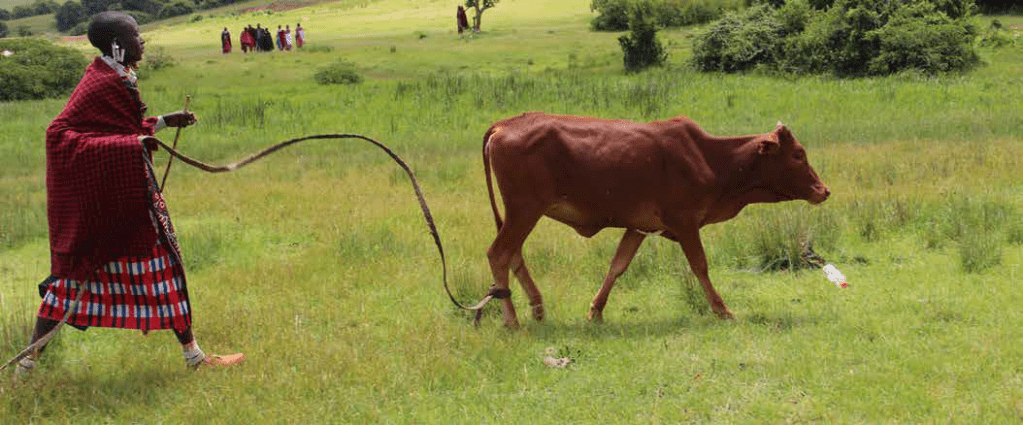
The design of the project was tailored such that the procurement is done for both heifers and bulls. The heifers are distributed to each beneficiary whereas the bulls are communally owned.
As part of the project, the first calf produced per heifer is passed on to another poor woman thus benefiting even more people in the community.
PALISEP and Oxfam closely monitor the management of cows including provision of health services and regular treatment.
Value for Money
The grant of €17,500 has been spent on;
- Training 28 women on livestock development and value chain analysis.
- Purchase and distribution of heifers to 28 women from 4 villages of Enguserosambu, Ng’arwa, Naan and Orkiu juu from Ngorongoro district.
Impact at Scale
Not only are they assets, heifers provide nutritious products for a family to sell, including milk, providing an economic support system to women in need.
- By giving Maasai women access to ownership of cows has since empowered them and broke the traditional belief that denied them ownership on patriachal lines.
- The Milk produced from heifers is being used to feed the children improving their nutritional status.
- Improved income of selected beneficiaries from the milk sold
- Training to the beneficiaries has improved their knowledge on livestock improvement.
Case Studies
Nosiruayi Karia
Nosiruayi Karia (34), a mother of four, is one of the early recipients. She recalls that when she got married her husband owned 16 cows; he later sold all of them and left. “I became so poor, I had to work really hard and sometimes walk long distances asking for contributions to raise money for my children’s school fees”.
When Nosiruayi received her heifer in 2014 she got so emotional. “I cried because I was so happy to finally own something,” she recalls. Her cow has now had its first calf. She is excited that very soon her family will be able to get surplus milk for sale. “We now drink tea with milk. Milk is nutritious,” she laughs.
Nashuru Tagei
Nashuru Tagei received her heifer in February 2016. Her husband left when she was 2 monhts pregnant. “I was confused, did not know what to do,” she says.
As a breadwinner for her family of four she had to work as a labourer doing part-time farming and sometimes fetch water and charging per bucket.
We met her during the heifer distribution day where she said; “Receiving a heifer is my definition of happiness,” Nashuru now sells milk and uses the money to pay for her children school requirements. She is also excited that her family uses some of the milk to live a healthy life.
Her biggest ambition is to see her children progress through education.
Looking back
The previous phases included a round of 72 cows (66 heifers and 6 bulls), and 66 women-beneficiaries have been reached directly. These heifers have started to breed and 36 calves have already been produced. Among the calves, heifers will be redistributed to reach more women and upscale the impact to improve food and nutrition security in poor families.
 Pastoral Livelihood Support and Empowerment Program (PALISEP)
Leave a comment